
The Student Grievance Redressal Cell gives students a defined, confidential route to raise concerns relating to academic matters, examinations, fee payments, campus facilities, or the conduct of staff and fellow students. Grievances may be submitted in writing to the Principal or through the online form linked below. The cell examines each complaint, hears the parties involved, and communicates its decision within a reasonable period. No student is disadvantaged for having approached the cell in good faith.
The Women Empowerment Cell works to make the campus a place where women students and staff can study and work with confidence. Its activities include awareness programmes on health, legal rights, and financial literacy; self-defence sessions; guest lectures by women achievers; and observance of International Women's Day, alongside skill-development and career-guidance programmes.
The Counselling Cell offers students a private space to talk through academic pressure, personal difficulties, or uncertainty about their future. Trained faculty counsellors are available during college hours, and sessions are held in confidence. The cell also runs group sessions on examination stress and career guidance, and refers students requiring specialised support to qualified professionals outside the institution.
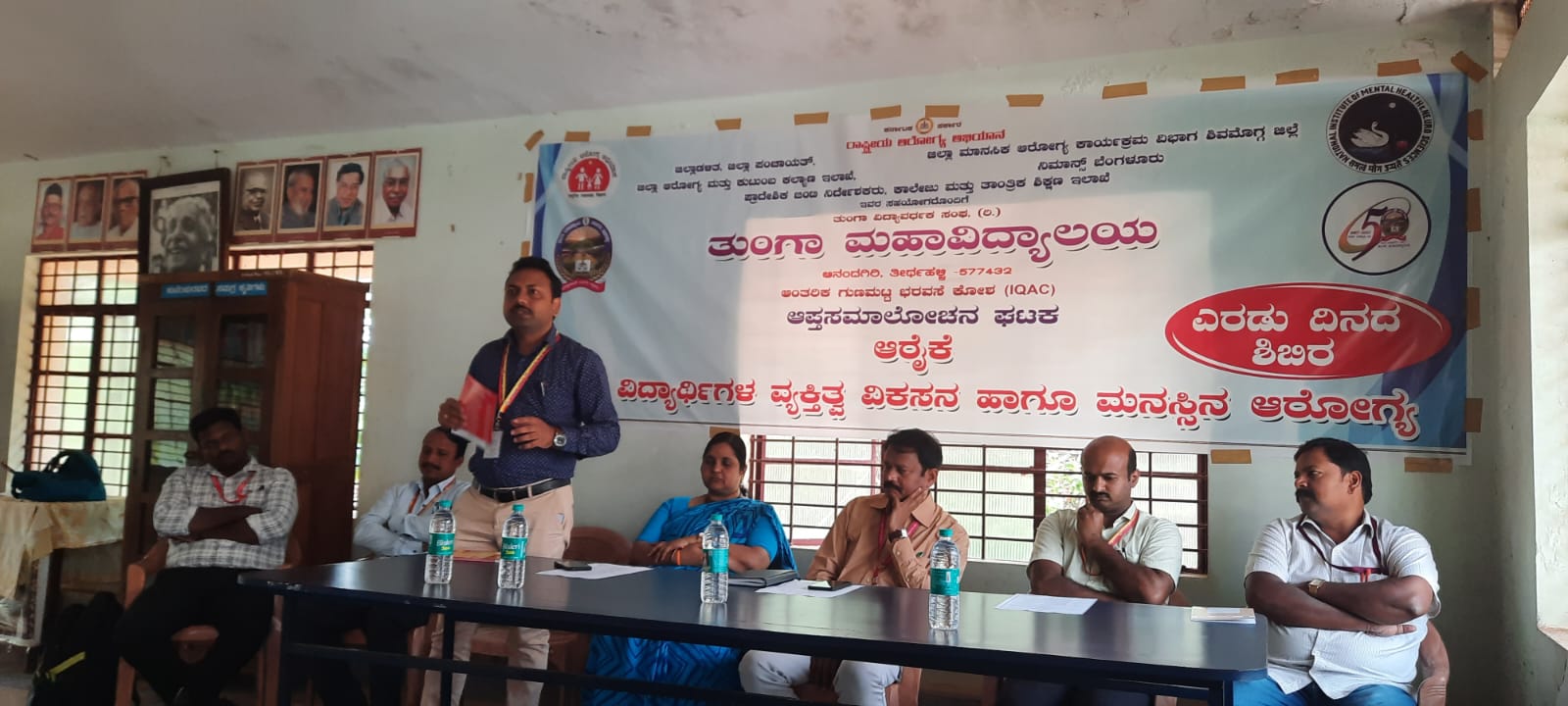
The Counselling Cell organised a two-day training programme for all teaching and non-teaching staff of the college, held in association with the District Mental Health Programme (National Health Mission, Shivamogga) and the National Institute of Mental Health and Neurosciences (NIMHANS), Bengaluru. The programme focused on students' personality development and mental well-being, and was conducted successfully.
Constituted under the Sexual Harassment of Women at Workplace (Prevention, Prohibition and Redressal) Act, 2013, the Internal Complaints Committee is the college's mechanism for preventing and addressing sexual harassment of women students and staff. It is chaired by a senior woman faculty member and includes faculty, a student representative, and an external member.
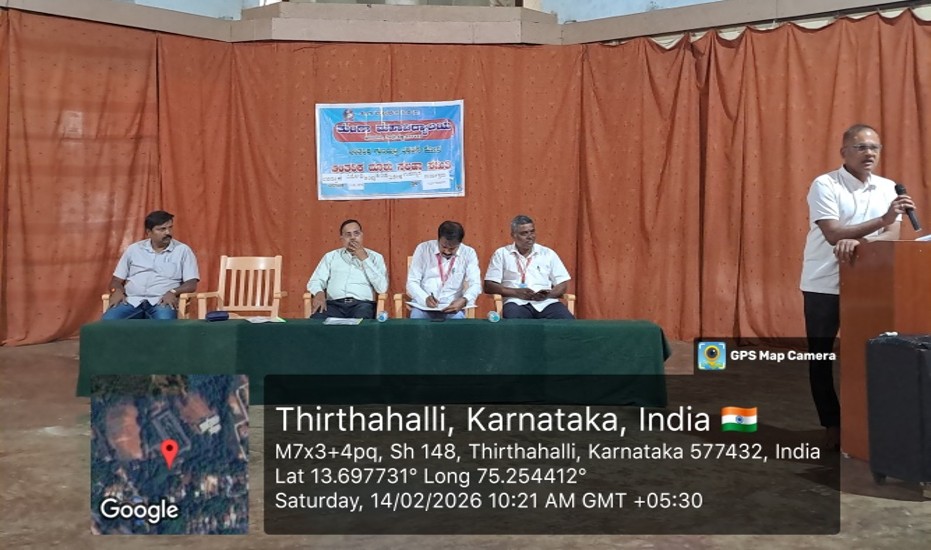
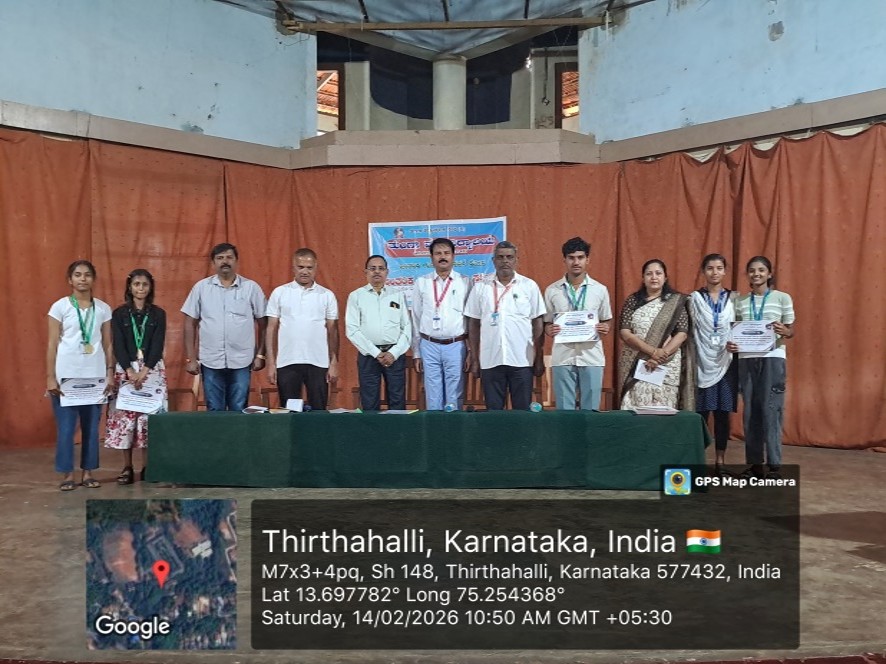
The Internal Complaints Committee (ICC), in association with the Internal Quality Assurance Cell (IQAC), organized a Special Lecture on the Dowry Prohibition Act on 14 February 2026 at 10:00 a.m. in the Silver Jubilee Hall. The programme aimed to create awareness among students and staff regarding the legal provisions related to dowry and to promote social responsibility in eliminating this social evil.
The resource person, Sri L.V. Mahendra, Advocate and Member of Tunga Vidyavardhaka Sangha, Thirthahalli, explained the salient features of the Dowry Prohibition Act and emphasized that dowry is not only illegal but also a serious social crime that violates the dignity and rights of women. He discussed the legal protection available to women against dowry-related harassment and exploitation, along with the penalties prescribed for those who demand, give, or accept dowry. He further stressed that legal enforcement alone cannot eradicate dowry without a positive change in social attitudes and encouraged students to take a firm stand against dowry practices.
The SC/ST Cell safeguards the interests of students belonging to Scheduled Castes and Scheduled Tribes and ensures that the reservation policy of the Government of Karnataka and the UGC is properly implemented. The cell assists eligible students with scholarship applications, monitors their academic progress, and works to ensure no student is held back by economic or social disadvantage.
Ragging in any form is prohibited on the campus, in hostels, and in transport used by students, in accordance with the UGC Regulations on Curbing the Menace of Ragging in Higher Educational Institutions, 2009. The Anti-Ragging Committee and Squad monitor the campus, particularly during the opening weeks of each academic year, and conduct awareness sessions for newly admitted students. Every student and parent signs the prescribed anti-ragging undertaking at admission. Complaints may be made to any committee member, the Principal, or the national anti-ragging helpline, and are acted on immediately — with disciplinary action, up to expulsion, for students found responsible.
The Incubation Cell encourages students to develop their own ideas into workable ventures, introducing the basics of entrepreneurship through workshops, idea presentations, and interaction with local entrepreneurs and alumni in business. Students with promising proposals are guided toward government schemes and startup support available in Karnataka, with particular emphasis on ventures rooted in the local economy of the Malnad region.
Set up in line with MHRD and UGC directions, the OBC Cell works for the welfare of OBC students at the college, ensuring reservation benefits in self-financed courses and scholarship schemes are properly maintained, and helping students integrate with the wider student community.